
10 Best Organic Sardines for Global Wholesale Buyers?
Choosing the right organic sardines for global wholesale markets requires more than comparing prices. Buyers must examine origin, certification, processing methods, packaging, and supplier reliability. This guide introduces ten notable options for importers, distributors, retailers, and foodservice companies.
Quality begins at the source. Responsible suppliers should provide valid organic certificates, harvest records, batch numbers, and traceability documents. Clear labeling matters. So does independent testing for heavy metals, microbiological safety, allergens, and product authenticity. Sardines should arrive in clean, undamaged cans or carefully sealed refrigerated packs. Their texture, aroma, oil quality, and appearance can reveal handling problems quickly.
Cold-chain control is essential for chilled or frozen products. However, canned seafood still needs stable storage and dependable shipping conditions. Buyers should also confirm destination-market rules before placing large orders. Organic standards differ between regions, and certification acceptance may not be automatic.
This article compares ten organic sardines using practical wholesale criteria. These include species identification, fishing practices, certification strength, nutritional value, packaging formats, minimum order quantities, and export experience. We do not treat every supplier claim as proven. A polished website is not enough.
Real-world performance matters more.
Some products may rank differently after freight costs, seasonal supply changes, or laboratory verification. That is an important limitation. The best choice depends on your market, customer expectations, and compliance requirements. Careful sampling and contract review can prevent expensive surprises. With transparent records and consistent communication, buyers can build a safer and more dependable seafood supply chain.
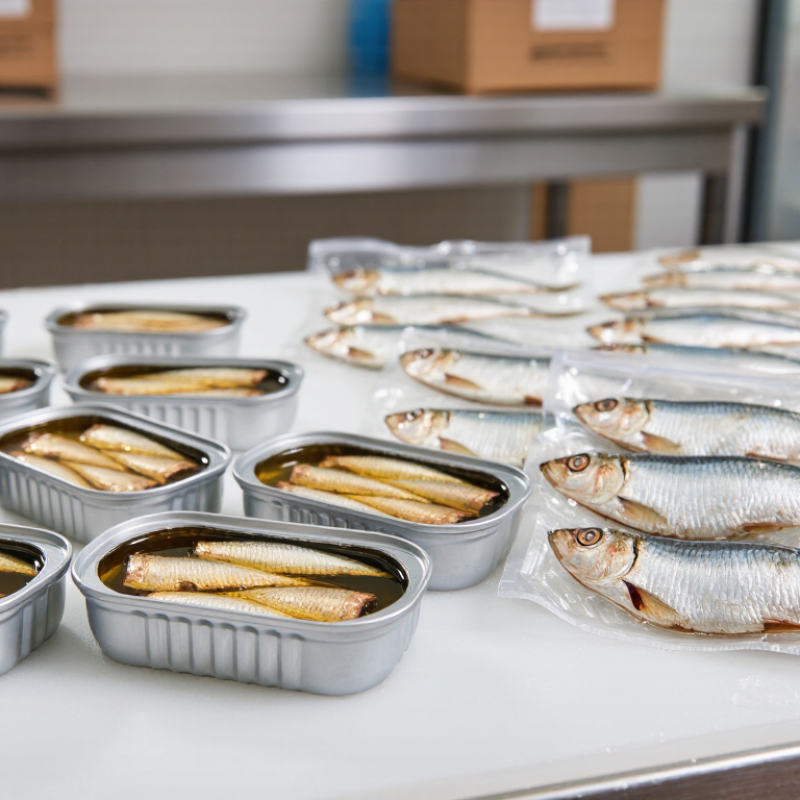
What Defines Organic Sardines for Wholesale Importers
For wholesale importers, “organic sardines” require more than a clean label. The term must match the destination market’s recognized organic rules. Wild-caught sardines may not qualify as organic under every jurisdiction. Buyers should confirm this point before negotiating volume or printing packaging.
Request a current certificate from an accredited certification body. Check the certificate holder, product scope, processing site, validity dates, and covered production lots. A reliable supplier should also provide harvest-area details, vessel records, catch documentation, and a traceability code. One code should lead back to a specific landing date and production batch.
Look closely at the ingredients. Plain sardines should not contain unexplained preservatives, unauthorized additives, or non-compliant oils. Review the oil source, salt level, can lining, and processing water. Laboratory reports can support checks for heavy metals, histamine, microbiological safety, and oxidation. These tests do not replace certification.
Small details matter.
Importers should compare carton labels with certificates and shipping documents. Mismatched species names or vague origin statements deserve written clarification. Packaging must also follow the destination country’s language, allergen, nutrition, and organic-label requirements.
No checklist is perfect. Certification may confirm production controls, but it cannot guarantee every fish has identical quality. A practical buyer combines documents, sample inspections, sensory evaluation, and supplier interviews. Clear records build trust. Honest uncertainty does too.
How to Evaluate Sardine Species, Origins, and Fishing Methods
For global wholesale buyers, sardine species matter more than attractive packaging. Common varieties include Sardina pilchardus, Sardinops sagax, and regional pilchards. Their oil content, texture, and average size can differ widely. Ask for the scientific name, catch area, harvest season, and product specification. Small fish may suit retail tins, while larger fish can perform better in foodservice.
Origin should be verified through traceable records, not a vague coastal label. Reliable suppliers can provide landing details, lot codes, processing dates, and cold-chain information. Check whether “organic” certification is legally applicable to the product and accepted in your destination market. Wild-caught sardines may not qualify under every organic standard. This point is often misunderstood. Review certification scope, inspection status, and laboratory reports for contaminants, histamine, and microbiological safety.
Fishing method also affects quality and environmental risk. Purse seines and ring nets can deliver consistent volumes, but buyers should ask about bycatch controls and local management rules. Selective operations with monitored seasons may support better stock protection, although no method is perfect. Look for catch documentation, vessel records, and current fishery assessments. In practice, I would compare three production lots before signing a large contract. One sample can hide fragile texture or uneven oil levels. Sensory checks, drained weight, tin integrity, and cooking odor deserve equal attention. A lower price is not always a lower total cost.
10 Best Organic Sardines for Global Wholesale Buyers? - How to Evaluate Sardine Species, Origins, and Fishing Methods
| Rank | Sardine Species | Common Trade Name | Principal Origins | Typical Fishing Method | Seasonality | Organic-Claim Evaluation | Wholesale Strengths | Key Buyer Checks |
|---|---|---|---|---|---|---|---|---|
| 1 | Sardina pilchardus | European pilchard | Northeast Atlantic, Mediterranean Sea, and Black Sea | Purse seine; occasional small-scale encircling nets | Generally seasonal; varies by fishing area | Wild-caught products may qualify for an organic handling or processing claim only where recognized rules and full chain-of-custody documentation apply. Wild origin alone is not proof of organic certification. | Well-established canning species; familiar flavor; broad European and Mediterranean supply base | FAO fishing area, landing port, harvest date, species identification, histamine controls, and certification scope |
| 2 | Sardinops sagax | Pacific sardine | Northeast and Southeast Pacific, including waters off western North and South America | Purse seine; light-assisted or small-scale net fisheries in some areas | Strongly influenced by ocean temperature and fishery regulations | Confirm whether the certification covers the fishery, processing facility, storage, and labeling—not merely the final packaged product. | Flexible formats; suitable for canned, frozen, meal, and oil-packed products | Stock status in the exact management unit, quota compliance, by-catch controls, and cold-chain records |
| 3 | Sardinops melanostictus | Japanese sardine | Northwest Pacific, especially waters around Japan and the Korean Peninsula | Purse seine; set nets and other coastal nets in local fisheries | Seasonal migrations and recruitment cycles affect availability | Use only an organic designation supported by the applicable importing market and an auditable wild-fish supply chain. | Good raw material for whole, frozen, dried, and canned formats; established East Asian demand | Radiological and contaminant testing where required, catch documentation, size grade, and processing temperature |
| 4 | Sardinops ocellatus | South African pilchard | Benguela Current region off Namibia and South Africa | Purse seine | Availability varies with annual biomass and fishing controls | A credible claim requires certification of the relevant fishery or supply chain under the destination market’s organic rules. | Firm flesh; suitable for canning and frozen wholesale; established regional landing infrastructure | Fishery management records, by-catch mitigation, vessel authorization, and proof of immediate chilling |
| 5 | Sardinops neopilchardus | Australian pilchard | Southern Australia, including coastal waters of Western, South, and southeastern Australia | Purse seine and other regulated coastal net fisheries | Regional and weather-dependent | Do not equate “natural,” “chemical-free,” or “wild” with organic; request a valid certificate and scope statement. | Traceable origin; useful for frozen whole fish, bait, pet-food ingredients, and human consumption | End-use grade, temperature history, parasite and histamine controls, and species name on export documents |
| 6 | Sardinella longiceps | Indian oil sardine | Arabian Sea and coastal waters of India, Pakistan, Sri Lanka, and nearby areas | Purse seine, ring seine, gillnet, and other small-scale coastal gears | Monsoon and recruitment patterns are important | Organic labeling is market-specific; verify approved certification, processor controls, and segregation from non-certified lots. | Distinctive oily profile; strong regional supply; suitable for traditional canned and frozen products | Moisture and oxidation control, ice-to-fish ratio, catch area, vessel records, and lot segregation |
| 7 | Sardinella aurita | Round sardinella | Eastern Atlantic, Mediterranean, and parts of the tropical eastern Atlantic | Purse seine, ring net, beach seine, and other small-scale nets | Depends on local upwelling and spawning cycles | Treat “organic” as a certification claim requiring documentary verification, not as a species characteristic. | Common in African and Mediterranean markets; available in frozen and canned forms | Exact FAO area, fleet type, legal landing evidence, freshness indicators, and cold-chain continuity |
| 8 | Sardinella gibbosa | Goldstripe sardinella | Western Pacific and eastern Indian Ocean, including Southeast Asian coastal waters | Purse seine, ring net, lift net, and small-scale coastal gears | Often linked to local monsoon and spawning seasons | Request certification details for the fishery, vessel or landing site, processor, and exporter separately where applicable. | Competitive raw-material cost; useful for frozen, dried, salted, and canned products | Species substitution risk, size uniformity, sulfite or additive declarations, and hygienic handling at landing |
| 9 | Sardinella lemuru | Bali sardinella | Indonesian waters and the eastern Indian Ocean | Purse seine, payang seine, and other regulated or small-scale net fisheries | Monsoon-driven and highly regional | A valid organic claim must be supported by an accepted standard, certification body, and traceable separation from conventional seafood. | Important regional fishery; suitable for frozen, canned, dried, and value-added products | Catch legality, vessel documentation, microbial testing, oil oxidation, and consistency of size grades |
| 10 | Sardinella maderensis | Madeiran sardinella | Eastern Atlantic and tropical West African coastal waters | Purse seine, ring net, beach seine, and artisanal net fisheries | Varies with coastal productivity and seasonal upwelling | Confirm the destination country’s organic rules because requirements for wild-caught seafood and processing claims differ by market. | Suitable for regional wholesale, frozen blocks, and canned preparations when properly chilled | Landing-site hygiene, temperature logs, traceability to vessel or cooperative, by-catch records, and export health certificates |
Buyer note: Most sardines traded internationally are wild-caught. “Organic” is therefore not an inherent species attribute; buyers should verify the applicable organic standard, certification scope, chain of custody, species identity, fishing area, legal catch documentation, and cold-chain records before making a wholesale purchase.
Key Quality Standards for Organic Sardine Products
For global wholesale buyers, organic sardine quality begins with verifiable certification. The certificate should match the product, processor, facility, and target market. Requirements differ by country. Check the certifier’s scope, validity dates, and audit status before signing a purchase contract.
Traceability must reach the fishing vessel or landing site. Each lot should show species, harvest area, landing date, processing location, and storage temperature. Sealed records matter. Wild-caught seafood may follow different organic rules than farmed products, so buyers should not assume that “organic” means identical standards everywhere. That assumption creates avoidable risk. Ask for chain-of-custody documents and independent laboratory reports covering histamine, heavy metals, microbiological safety, and relevant residues. Test frequency should reflect product risk and market requirements.
Physical quality is equally important. Cans should have clean seams, accurate weights, intact labels, and no swelling or leakage. The sardines should retain a firm texture, clean marine aroma, and consistent color after opening. Oil or sauce must meet declared ingredient and allergen requirements. Packaging materials should protect against oxidation during long shipments. In practice, random carton inspections often reveal problems hidden by attractive samples. A buyer may also compare production codes with temperature logs, although records are sometimes incomplete. That weakness deserves correction, not polite acceptance. Organic certification supports trust, but it does not replace sensory checks, laboratory verification, or careful supplier communication.
Packaging, Certifications, and Global Import Requirements
For global wholesale buyers, organic sardines require more than an attractive label. FAO’s State of World Fisheries and Aquaculture 2024 reported 185 million tonnes of aquatic animal production in 2022. That scale increases pressure on traceability, packaging, and origin verification. Small details matter.
Choose retort cans or certified food-grade pouches with strong seam control, readable lot codes, and corrosion-resistant interiors. Packaging should withstand long ocean transit, humidity, and temperature changes. Request migration and food-contact declarations under applicable EU or US rules. Codex CXS 94-1981 provides identity and quality guidance for canned sardines. Yet packaging alone proves nothing.
Certification claims need careful review.
In the European Union, organic rules mainly cover aquaculture; wild-caught sardines generally cannot carry an organic production claim. The United States also lacks a broad federal organic standard for wild seafood. Buyers should verify the certifier, scope, species, fishing area, and processing ingredients. For imports, EU shipments may require health documents, catch certificates, and IUU controls under Regulation 1005/2008. US shipments require seafood HACCP controls, prior notice, and Foreign Supplier Verification Program records. FDA’s Fish and Fishery Products Hazards and Controls Guidance remains a practical reference. Some suppliers provide incomplete documents. That is a warning, not a minor inconvenience. Product names, allergens, net weight, drained weight, lot identification, and storage instructions must match every market’s labeling rules. Mistakes happen, especially after relabeling. Double-check them.
How to Compare the Best Organic Sardine Suppliers for Wholesaleav电影
How to Compare the Best Organic Sardine Suppliers for Global Wholesale
“Organic sardines” requires careful verification. In many markets, wild-caught fish cannot carry an organic certification. The European Union’s Regulation (EU) 2018/848 mainly covers organic aquaculture, not wild capture. Therefore, buyers should ask whether “organic” describes the fish, the ingredients, or only the processing facility. A valid certificate should show its scope, issuing body, product code, and expiry date.
Supplier comparison should begin with traceability. Request the harvest area, fishing method, landing date, lot number, and cold-chain records. FAO’s State of World Fisheries and Aquaculture 2024 reported 185 million tonnes of aquatic animals produced in 2022. About 89% entered human food channels. This scale increases supply options, but it also makes documentation more important. Check histamine testing, heavy-metal results, microbiological reports, packaging integrity, and recall procedures. A low price can look efficient. It may also hide weaker controls.
Tips: Compare three recent lots, not one sample. Ask for certificates before negotiating volume. Confirm whether testing covers the finished product. Also review port delays, minimum order quantities, and temperature logs. Buyers often focus on size and price, yet delivery consistency can matter more. I would not rely on a supplier’s “organic” wording alone. Certification language differs by country, and that weakness deserves a second review. Pair organic claims with recognized seafood sustainability and chain-of-custody documentation, when applicable.
Related Posts
-
China Top Organic Sardines Benefits and Nutritional Value Explained?
-
How to Choose Organic Sardines for Healthy Eating?
-
What is Organic Sardines and Why Should You Buy Them?
-
Essential Tips for Sourcing Quality Canned Fish Globally
-
Top 10 Tinned Fish Subscription Services You Should Try?
-
Why Are Sardine Fish a Top Choice for Global Buyers?
