2026 Best Tinned Fish Market Suppliers for Global Buyers?

The 2026 tinned fish market is entering a more demanding phase. Global buyers now assess suppliers beyond price, packaging, and production volume. They examine traceability, species protection, food safety, labor practices, and delivery reliability. A low-cost quotation can become expensive when labels fail, tins arrive dented, or documentation is incomplete.

The FAO’s State of World Fisheries and Aquaculture 2024 reported 185 million tonnes of global aquatic animal production in 2022. It also noted that about 89% was used for direct human consumption. These figures show the sector’s scale, but they do not identify reliable tinned fish partners. Buyers must study narrower evidence, including factory audits, export records, and product specifications. UN Comtrade data can help compare country-level trade flows, while the OECD-FAO Agricultural Outlook 2024–2033 provides useful context for seafood demand, prices, and supply pressure.

The best suppliers will not always be the largest. Sometimes, a medium-sized cannery offers stronger batch control and faster communication. That detail matters. Buyers should request catch-area information, processing dates, shelf-life records, certificates, and sample tins before signing contracts. Certifications such as HACCP, BRCGS, IFS, MSC, or ASC may support due diligence, depending on the product and destination market. However, certification alone is not proof of perfect performance.

This guide examines leading 2026 supplier categories, sourcing regions, product strengths, and buyer risks. It also recognizes an uncomfortable reality: public supplier information can be incomplete or outdated. Independent verification remains essential. Geological? No—commercially, carefully verified evidence matters more than impressive marketing claims.

2026 Best Tinned Fish Market Suppliers for Global Buyers?

Global Tinned Fish Market Scope and Product Categories

The global tinned fish market covers shelf-stable seafood prepared for retail, foodservice, emergency supply, and ingredient use. Its scope includes wild-caught and farmed species, regional processing centers, export channels, and changing consumer preferences. Buyers should examine species availability, harvest seasons, pack formats, and destination-market requirements before selecting suppliers.

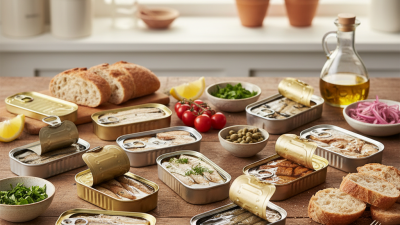
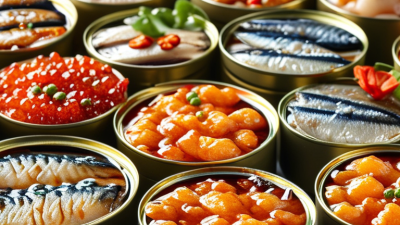
Core product categories include tuna, sardines, mackerel, salmon, anchovies, herring, and canned shellfish. Products may be packed in oil, spring water, brine, tomato sauce, or seasoned marinades. Format also matters. Common options include ring-pull cans, standard cans, aluminum trays, glass jars, and flexible pouches. Smaller packs suit convenience retail, while larger formats support restaurants and catering kitchens.

Reliable sourcing depends on more than price. Check ingredient declarations, net weight, drained weight, lot coding, factory hygiene controls, and traceability records. Independent testing can verify histamine levels, contaminants, salt content, and packaging integrity. It is also useful to review catch documentation and recognized food-safety certifications. However, certificates alone are not proof of consistent performance. Ask for recent production samples and compare them with shipment specifications.

Some details remain difficult to judge remotely. A bright label may hide uneven texture or excessive liquid. Port delays can also affect delivery planning. Buyers should leave realistic inspection time and record every quality disagreement. Supplier rankings change by region, volume, species, and compliance needs. There is no universal best option.

Key Criteria for Evaluating Tinned Fish Suppliers

For global buyers, supplier evaluation begins beyond price.
The strongest candidates show traceability from vessel or farm to sealed can. FAO’s State of World Fisheries and Aquaculture 2024 reported 185 million tonnes of aquatic animals produced in 2022. About 89% supported direct human consumption. That scale increases choice, but not automatically quality. Ask for species, catch area, harvest date, lot codes, and chain-of-custody records. Keep evidence, not promises.

Review food-safety controls against Codex guidance and ISO 22000-based systems. Request recent third-party audit reports, process-flow diagrams, metal-detector checks, and incubation results. Examine can seams, dents, swelling, net weight, drained weight, salt, and histamine controls. The OECD-FAO Agricultural Outlook 2024-2033 projects global fish consumption to reach about 21.4 kilograms per person by 2033. Demand may rise, so capacity evidence matters. Compare 12-month production records, not one impressive sample.

Commercial reliability needs measurable terms.
Check minimum order quantities, lead times, port options, payment terms, complaint response times, and recall procedures. Use UN Comtrade import data to compare HS 1604 trade flows, declared values, and supplier consistency across markets. Price alone misleads. A low quote can hide weak packaging or costly delays. I would test one pilot shipment before signing a long contract. No checklist is perfect. Seasonal catch changes, currency movements, and container disruptions can still overturn careful planning. Ask difficult questions, then document every answer.

Leading Sourcing Regions and Supplier Capabilities

2026 Best Tinned Fish Market Suppliers for Global Buyers?

In 2026, leading tinned fish sourcing regions will combine dependable processing with clear export documentation. Portugal and Spain remain strong choices for sardines, mackerel, and selected tuna products. Their coastal facilities often support recipe development, retort processing, and recyclable metal packaging. Buyers should request catch-area records, lot codes, allergen controls, and temperature logs. Small details matter. However, production capacity can change during seasonal landings.

Southeast Asian suppliers offer broad product ranges and competitive private-label capabilities. Thailand and Vietnam commonly process tuna, sardines, mackerel, and seafood blends for international distribution. Many facilities provide automated filling, retort sterilization, metal detection, and multilingual carton labeling. Buyers should check minimum order quantities, lead times, and container-loading procedures. A low quotation may hide weaker inspection support or limited flexibility.

China also provides extensive canning capacity, especially for customized sizes, sauces, and printed packaging. Reliable factories should demonstrate HACCP-based controls, current third-party audits, and laboratory testing for histamine, heavy metals, microbiological safety, and net weight. Destination-market rules still require independent verification. Product samples should be tested before contract approval, not after shipment. I have found that supplier websites rarely show the full operational picture. Factory visits, video inspections, and documented corrective actions reveal more. Even then, forecasts can be imperfect, especially when raw fish availability and freight schedules shift quickly.

2026 Best Tinned Fish Market Suppliers for Global Buyers

The chart compares major sourcing regions by a normalized supplier-readiness index based on regional access to tuna and small pelagic resources, seafood-processing scale, export logistics, and common food-safety certification requirements. Southeast Asia and Latin America score strongly because of their established tuna-processing ecosystems, while Southern Europe remains highly competitive in processing quality, traceability, and access to European markets. The benchmark reflects regional capabilities rather than individual companies or brands. Sources: FAO fisheries and aquaculture statistics, FAO SOFIA reports, and ITC trade data.

Food Safety, Certifications, and Import Compliance

2026 Best Tinned Fish Market Suppliers for Global Buyers?

Food safety begins before the can reaches a loading dock. The FAO’s State of World Fisheries and Aquaculture 2024 reported 185.4 million tonnes of aquatic animals produced in 2022. About 89% was used for human consumption. This scale makes supplier verification essential, not optional. Buyers should request HACCP records, sanitation procedures, allergen controls, and traceability documents for each production lot. Codex General Principles of Food Hygiene also supports risk-based controls across processing and transport.

Check the can, not only the certificate. Look for swelling, rust, leakage, damaged seams, or unclear lot codes. Thermal processing records should show scheduled temperatures, times, and corrective actions. The WHO estimates that contaminated food causes 600 million illnesses and 420,000 deaths each year. Small control failures can become serious import problems. They can also damage consumer trust.

Import compliance varies by destination. A supplier may need facility registration, health certificates, approved labels, ingredient declarations, and an importer verification program. US-bound shipments require careful attention to the Foreign Supplier Verification Program. European buyers should review applicable hygiene, contaminant, and traceability rules. Certificates can appear perfect while a production record remains incomplete. That weakness deserves questioning. Independent laboratory testing for histamine, heavy metals, microbiological hazards, and net weight adds useful evidence, although testing alone cannot replace factory audits. A practical supplier review should compare documents, physical samples, audit findings, and shipment history. Mistakes happen. Reliable partners disclose them early.

Pricing, Logistics, and Contract Terms for Global Buyers

In 2026, global buyers should compare tinned fish suppliers through landed cost, not factory price alone. A quotation may show USD 18 per case, yet freight, insurance, inspection, and import duties can add 20 percent. Request pricing under FOB, CFR, and DDP terms when legally available. The comparison becomes clearer.

Ask for a full specification sheet before discussing volume. It should state fish species, net weight, drained weight, oil or brine type, packing format, shelf life, and carton dimensions. A practical trial order might include 500 to 1,000 cases. This reveals leakage, label quality, and delivery accuracy. Some buyers skip this step. That mistake is expensive.

Logistics planning should cover port congestion, container temperature exposure, pallet patterns, and documentation. Use moisture-resistant cartons for humid routes. Set an agreed tolerance for damaged cartons, such as less than 1 percent. Payment terms often range from a deposit to balance against shipping documents, but stronger buyers negotiate partial payment after inspection. Contracts should define production lead time, price validity, quality claims, recall duties, and approved substitutions. Include a delay remedy. It matters.

A realistic contract may fix prices for 60 days, then adjust them against agreed freight or raw-material indexes. Avoid vague wording such as “market-based pricing.” Specify currencies, measurement units, and dispute procedures. I would also request batch codes and retained samples for every shipment. Even experienced teams miss small details, especially when prices change quickly. That weakness deserves regular review.

2026 Best Tinned Fish Market Suppliers for Global Buyers? - Pricing, Logistics, and Contract Terms for Global Buyers
Indicative sourcing comparison for international buyers. Prices are typical bulk export ranges and vary by species, fishing season, catch method, oil or sauce formulation, packaging material, certification, destination, and order volume.
Product Category Common Species Standard Pack Indicative FOB Price
per Case
Typical Case Pack Typical MOQ Production Lead Time Shelf Life Common Export Logistics Recommended Contract Terms
Canned Tuna in Brine Skipjack tuna; yellowfin tuna 170–185 g net weight cans US$18–30 48–50 cans 1–2 pallets 30–60 days after artwork and deposit approval 36–60 months Dry container; ambient transport; protect from excessive heat and moisture 20–30% deposit; balance against shipping documents; buyer-approved pre-shipment samples
Canned Tuna in Oil Skipjack tuna; yellowfin tuna 160–185 g net weight cans US$21–36 48–50 cans 1–2 pallets 35–65 days 36–60 months FCL or consolidated dry cargo; temperature-controlled transport is generally unnecessary Specify oil type, drained weight, fish-to-oil ratio, can seam standard, and permitted additives
Canned Sardines in Tomato Sauce Sardine; pilchard 120–155 g net weight cans US$16–28 50–100 cans 1 pallet or 1,000–3,000 cans 30–55 days 36–60 months Dry container; use pallet protection against crushing and carton moisture Agree on sauce viscosity, fish size, drained weight, carton specification, and lot coding before production
Canned Sardines in Oil Sardine; pilchard 120–125 g net weight cans US$17–31 50–100 cans 1 pallet or 1,000–3,000 cans 30–55 days 36–60 months Ambient ocean freight; cartons should be reinforced for long-distance handling Use a species and size tolerance clause; include packaging approval and defect limits in the quality schedule
Canned Mackerel in Brine Atlantic mackerel; chub mackerel 155–425 g net weight cans US$19–39 24–50 cans 1–2 pallets 35–70 days, depending on raw material availability 36–60 months Dry FCL preferred; allow additional loading protection for larger cans Define fish size, cut style, net weight, drained weight, and acceptable skin or bone content
Canned Mackerel in Tomato Sauce Atlantic mackerel; chub mackerel 155–425 g net weight cans US$21–43 24–50 cans 1–2 pallets 40–75 days 36–60 months Ambient shipping; avoid prolonged exposure to high container temperatures Include sauce formula approval, allergen declaration, microbiological limits, and batch traceability requirements
Canned Anchovies European anchovy; Peruvian anchoveta 50–120 g net weight cans or jars US$32–70 24–50 units 1 pallet or 500–2,000 units 45–90 days 24–36 months Dry container; glass formats require dividers and stronger outer cartons Confirm fillet count, salt level, oil type, maturation period, and glass or tin packaging requirements
Canned Salmon Pink salmon; chum salmon; sockeye salmon 105–213 g net weight cans US$32–68 24–48 cans 1 pallet or 500–2,000 cans 45–90 days; seasonal supply may extend production 36–60 months Dry ocean freight; maintain documented temperature and hygiene controls during handling Specify species, wild or farmed origin, bone and skin presentation, fishing area, and catch documentation
Canned Smoked Fish Mackerel; herring; sprats 100–250 g net weight cans US$25–55 24–50 cans 1 pallet or 1,000 cans 40–75 days 24–36 months Dry container; odor-sensitive mixed loads should be avoided Define smoking method, smoke intensity, moisture content, ingredient list, and sensory acceptance standard
Private-Label Mixed Carton Buyer-selected tuna, sardine, mackerel, or salmon Buyer-selected format, commonly 100–425 g US$18–65 24–100 units 1–3 pallets per SKU 60–120 days including artwork, packaging procurement, and approval 24–60 months, depending on recipe and packaging FCL recommended for multiple SKUs; consolidate only when carton compatibility is confirmed Use a detailed technical annex covering artwork ownership, packaging minimums, forecast volumes, inspection rights, and recall procedures
Commercial reference: FOB prices exclude freight, insurance, import duties, taxes, destination charges, laboratory testing, and registration costs. Buyers should request a current quotation, product specification, certificate of analysis, catch-area or aquaculture documentation where applicable, allergen statement, packaging declaration, and an agreed Incoterms® 2020 rule before placing an order.