How to Source Canned Fish Wholesale in 2026?

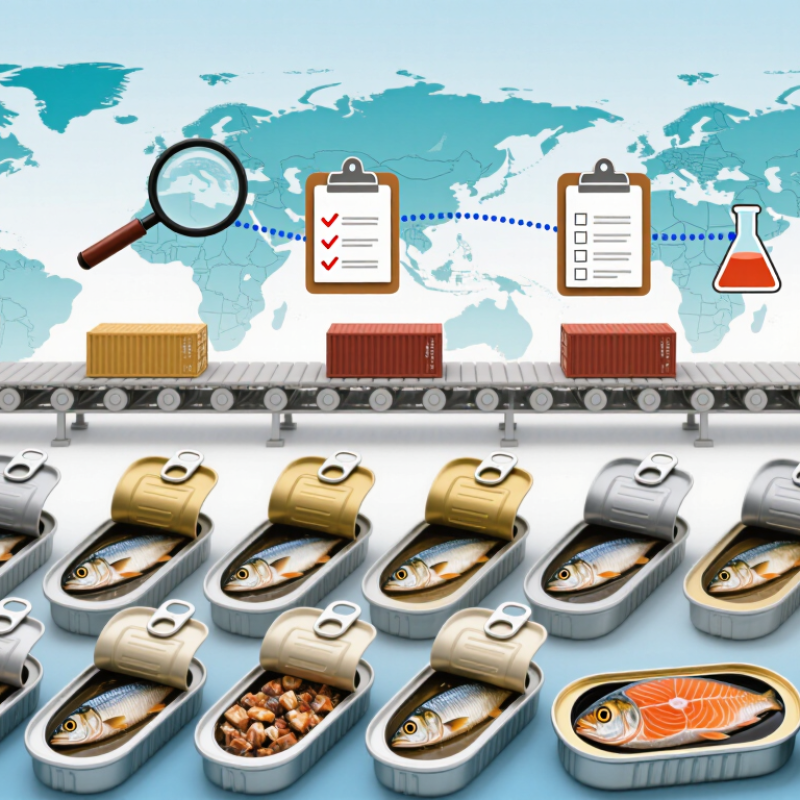
Sourcing canned fish wholesale in 2026 requires more than comparing prices on a supplier list. Buyers must examine species, catch area, processing methods, packaging, shelf life, and available certifications. A reliable supplier should provide clear product specifications, batch records, and traceability documents. Details matter.

This guide explains how to evaluate manufacturers, traders, and seafood distributors for different markets. It covers tuna, sardines, mackerel, salmon, and other common products. You will learn how to compare bulk cartons, minimum order quantities, private-label options, and delivery terms. Practical checks include reviewing HACCP systems, food safety certifications, laboratory reports, and production-site evidence. Requirements can differ by destination, so buyers should confirm current import, labeling, allergen, and documentation rules with qualified local authorities.

A low quotation may hide weak packaging or inconsistent quality. Prices move. Freight, metal costs, seasonal catches, and currency changes can affect final margins. Ask for samples before making a large commitment. Inspect the can seams, pull tabs, liquid ratio, odor, texture, and printed date codes. Independent testing may also help verify histamine, heavy metals, microbiological safety, and species claims.

No sourcing plan is perfect. Supplier information can be incomplete, and forecasts can fail. That is why careful buyers keep backup suppliers, document every decision, and review performance after each shipment. The aim is not merely to find cheap canned fish. It is to build a dependable supply chain that protects product quality, customer trust, and long-term business growth.

How to Source Canned Fish Wholesale in 2026?

Define Wholesale Canned Fish Categories and Buyer Requirements

How to Source Canned Fish Wholesale in 2026?

A practical sourcing review starts by defining the canned fish category clearly. Buyers may need tuna, sardines, mackerel, salmon, or mixed seafood products. Species alone is not enough. Specify fillet, chunks, flakes, whole fish, or boneless portions. Also record the packing medium, such as oil, water, brine, or sauce. Can sizes matter too, from small retail tins to larger foodservice packs. A neat category sheet reduces quotation errors.

Buyer requirements should include target volume, preferred origin, shelf-life period, and delivery schedule. Many importers request microbiological reports, ingredient declarations, allergen details, nutrition panels, and traceability records. Packaging language and date coding must match the destination market. Ask about minimum order quantities and production lead times before comparing prices. The lowest quote may hide weaker packaging or short remaining shelf life. That risk is easy to underestimate.

Tips: Build a simple specification table before contacting suppliers. List species, cut, net weight, drained weight, packing liquid, carton quantity, and required documents. Request a sample carton and inspect the can seams, labels, odor, and texture. Do not rely only on photographs. Recheck every detail against the purchase contract. Some requirements may change during internal approval, so leave room for revision.

Verify Supplier Qualifications, Certifications, and Product Compliance

How to Source Canned Fish Wholesale in 2026?

Supplier verification should begin with legal registration and production-site records. Ask for the factory license, ownership details, audit history, and export authorization. The FAO’s State of World Fisheries and Aquaculture 2024 reported 185.4 million tonnes of aquatic animal production in 2022. About 89% was used for direct human consumption. This scale increases the need for disciplined traceability.

Request valid HACCP documentation and a food-safety certification with a clear scope. Check the issuing body, certificate number, covered site, product category, and expiry date. Do not rely on logos. Contact the certification body when the document looks altered or incomplete. A certificate is not proof of every shipment. Compare it with recent audit findings, corrective actions, and production records.

Product compliance needs equal attention. Review the scientific species name, catch area, processing method, allergens, additives, net weight, drained weight, and shelf life. Ask for recent laboratory reports covering heavy metals, histamine, microbiological safety, and packaging integrity. Codex guidance can support international checks, but destination-market rules still control the shipment. Confirm lot coding from fishing records to finished cans. Inspect sample cartons for rust, swelling, leaking seams, or unclear labels. My own sourcing reviews often find one weak link: paperwork is current, but batch-level evidence is missing. That gap deserves a written correction plan before purchase orders are approved.

How to Source Canned Fish Wholesale in 2026? - Verify Supplier Qualifications, Certifications, and Product Compliance

Practical verification matrix for evaluating canned fish suppliers, products, documentation, and regulatory readiness.

Verification Area Wholesale Requirement Evidence to Request Relevant Standard or Regulation Recommended 2026 Check Risk Level
Legal Business Qualification Supplier must be legally registered to manufacture, pack, store, or export canned fish in its operating jurisdiction. Business registration, food-manufacturing license, facility address, export registration, and current operating permits. Importing-country food laws and the competent authority rules of the production country. Confirm that company names, facility addresses, license numbers, and document validity dates match across all records. High
Food Safety Management System A documented, implemented, and independently audited food-safety system should cover receiving, processing, thermal treatment, storage, and dispatch. Valid certificate, scope statement, latest audit report, nonconformity closure records, and certification-body details. HACCP principles; ISO 22000; FSSC 22000; BRCGS Food Safety; or an equivalent recognized scheme. Check that the certificate scope specifically includes fish or seafood processing and the supplied product category. High
Seafood HACCP Controls The supplier must identify and control biological, chemical, and physical hazards associated with seafood and shelf-stable processing. Product-specific HACCP plan, hazard analysis, critical limits, monitoring logs, corrective actions, and verification records. U.S. FDA 21 CFR Part 123 for seafood HACCP, where applicable; Codex HACCP principles. Review controls for histamine, allergens, metal, process deviations, container integrity, and post-process contamination. High
Commercial Sterility and Thermal Process Each shelf-stable product must be manufactured using a validated scheduled process suitable for its container size, formulation, and filling conditions. Scheduled process, process-authority approval, retort records, temperature and time charts, F0 or equivalent process data, and deviation reports. Applicable low-acid canned-food requirements, including U.S. FDA 21 CFR Parts 113 and 114 where relevant. Verify that the process record matches the exact SKU, can size, product formulation, production line, and lot code. High
Can and Container Integrity Containers must be suitable for the product, hermetically sealed, corrosion-resistant for the intended shelf life, and free from critical seam defects. Can specification, double-seam inspection records, vacuum measurements, pressure or leak-test results, and packaging-conformity documents. Applicable food-contact-material rules and recognized can-seam inspection practices. Request seam teardown results from representative production lots and define acceptance criteria before the first order. High
Species and Country-of-Origin Traceability The declared fish species, harvest or farming origin, processing location, and lot identity must be traceable through the supply chain. Species declaration, catch or farming records, vessel or farm information where applicable, production records, and one-step-back/one-step-forward traceability test. Importing-country traceability and country-of-origin labeling requirements; applicable fisheries documentation rules. Conduct a documented mock recall and require lot-level traceability within an agreed response period. High
Contaminant and Residue Testing Testing must reflect the species, harvest area, ingredients, processing method, and destination-market risks. Recent laboratory reports for histamine, heavy metals, contaminants, microbiology, and relevant veterinary or environmental residues. Destination-market maximum levels; EU Regulation (EU) 2023/915 where applicable; Codex standards where adopted. Use an ISO/IEC 17025-accredited laboratory and compare test methods, detection limits, lot numbers, and sampling dates. High
Histamine Control Species capable of histamine formation require effective temperature control, receiving checks, supplier controls, and verification testing. Receiving-temperature logs, time-temperature records, histamine test results, sampling plan, and corrective-action history. U.S. FDA seafood HACCP guidance and the applicable legal limit in the destination market. Do not accept a generic certificate; confirm that the test applies to the exact species and production lot. High
Allergen and Ingredient Declaration Fish species, oils, sauces, additives, flavorings, and other regulated allergens must be accurately declared and controlled against the formulation. Master formula, ingredient specifications, allergen matrix, supplier declarations, label artwork, and change-control records. Destination-market allergen-labeling law; U.S. FALCPA/FASTER requirements where applicable; EU Regulation (EU) No 1169/2011 where applicable. Reconcile the formula, product specification, nutrition panel, allergen statement, and physical label before approval. Medium
Label and Marketing Compliance Labels must accurately state product identity, net quantity, ingredients, allergens, nutrition information, lot code, date marking, storage instructions, and origin details required by the market. Final label proof, regulatory review, nutrition calculation or analysis, translation review, and destination-market artwork approval. Destination-market labeling legislation, including U.S. FDA food-labeling rules or EU Regulation (EU) No 1169/2011 where applicable. Check claims such as “wild,” “sustainable,” “dolphin-safe,” “organic,” or “MSC/ASC certified” only when supporting evidence exists. High
Sustainability and Chain-of-Custody Claims Environmental or ethical claims must be specific, verifiable, and connected to the exact species, fishery, farm, product, and supply-chain scope. Current certificate, certificate scope, chain-of-custody records, claim-use authorization, and product eligibility list. Applicable certification-program rules and destination-market advertising or green-claims requirements. Never treat a factory certificate as proof that every product or raw-material source qualifies for a sustainability claim. Medium
Shelf Life and Storage Validation The stated shelf life must be supported by product, packaging, process, and storage-condition data. Shelf-life study, accelerated or real-time stability data, storage specifications, date-code policy, and retained-sample records. Destination-market date-marking and food-safety requirements; applicable Codex product standards. Confirm remaining shelf life at shipment and arrival, and define minimum acceptance thresholds in the purchase contract. Medium
Foreign Supplier and Import Controls The importer or buyer must maintain documented supplier approval, risk assessment, verification, and corrective-action procedures. Supplier questionnaire, audit report, hazard analysis, compliance history, recall history, import documents, and corrective-action evidence. U.S. FDA Foreign Supplier Verification Program, 21 CFR Part 1 Subpart L, where applicable; equivalent destination-market controls. Assign a responsible compliance owner and retain verification records for each supplier and product category. High
Product Specification and Sample Approval The commercial specification must define species, cut, packing medium, drained weight, net weight, can format, sensory attributes, defects, and tolerances. Signed product specification, approved pre-production sample, technical data sheet, inspection standard, and change-notification procedure. Buyer specification plus applicable legal standards for identity, composition, weights, and labeling. Use a golden sample and written acceptance limits; do not approve products based only on photographs. Medium
Commercial and Logistics Readiness Supplier must demonstrate reliable production capacity, export packing, palletization, documentation, and shipment control for the agreed order volume. Production capacity statement, lead time, minimum order quantity, carton specification, pallet plan, commercial invoice, packing list, and transport conditions. Incoterms® rules as agreed by contract; destination-market customs, import, and documentation requirements. Run a pilot order, inspect loading photos or records, verify lot-code readability, and confirm documents before dispatch. Medium
Suggested Supplier Approval Rule:
Approve All high-risk items verified and no unresolved critical nonconformity.
Conditional Minor gaps have written corrective actions and deadlines.
Reject or Hold Missing legal, HACCP, thermal-process, traceability, or safety evidence.

Compare Pricing, Minimum Orders, Packaging, and Shipping Terms

How to Source Canned Fish Wholesale in 2026?

Pricing should start with species, pack size, oil or brine, and the delivery term. FAO’s State of World Fisheries and Aquaculture 2024 recorded 185 million tonnes of aquatic animal production in 2022. Around 89% went to direct human consumption. This supports steady demand, but it does not guarantee low prices.

Compare supplier offers using cost per drained kilogram, not only cost per can. UN Comtrade data for HS 1604 can help check export values and shipment quantities. Treat database averages carefully. They may include premium products and different specifications.

Minimum orders often range from one mixed pallet to a full container. Ask whether mixed flavors, labels, or can sizes change the MOQ. A low MOQ may carry higher unit pricing.

Packaging requires equal attention. Confirm net weight, drained weight, can diameter, carton count, pallet height, and language requirements. A practical sample check should include opened cans, liquid leakage, dented corners, and label adhesion after refrigeration. Small details matter.

Shipping terms can change the real quotation. Request FOB, CIF, and DDP comparisons when available. Confirm port congestion, free storage days, temperature controls, insurance, and demurrage responsibility.

The UNCTAD Review of Maritime Transport 2024 highlighted continuing disruption risks on major sea routes. Freight rates can move before your production slot is ready. I have seen buyers compare carton prices while ignoring destination charges. That mistake is expensive.

Keep a written specification, and revise it when the first sample exposes a weakness.

Evaluate Samples, Quality Standards, Shelf Life, and Traceability

How to Source Canned Fish Wholesale in 2026?

A reliable sample review starts with the can, not the brochure. Check dents, rust, swelling, seam uniformity, net weight, drained weight, oil separation, and odor after opening. Request production codes and compare them with invoices. Codex Standard CXS 119-1981 provides technical guidance for canned fish quality, including container condition and product characteristics. A clean label is not proof of strong processing control. I would reject samples showing loose flakes, excessive liquid, or unexplained color changes.

Shelf life needs evidence. USDA FSIS guidance places low-acid canned foods, including fish, at about two to five years for best quality. Ask for accelerated shelf-life data, storage conditions, and remaining shelf life at shipment. “Long shelf life” is too vague.

FAO’s State of World Fisheries and Aquaculture 2024 reported 185 million tonnes of aquatic animal production in 2022. That scale makes consistent quality screening more important, not less.

Traceability should reach beyond the warehouse. Request the fishing area or farm origin, harvest date, vessel or pond records, processing site, lot code, and temperature history. FDA Seafood HACCP guidance supports documented hazard controls, especially for histamine-prone species. Verify the supplier’s testing records, including histamine where relevant, microbiological checks, and metal detection results. Keep sealed samples from every lot. One limitation remains: paperwork can look complete while batch discipline is weak. Recheck records against physical codes.

Finalize Contracts, Import Procedures, and Long-Term Supply Plans

How to Source Canned Fish Wholesale in 2026?

A wholesale contract should specify species, origin, pack size, oil or brine, net weight, and drained weight. It must also define acceptable defect levels, laboratory testing, shelf-life, and claim procedures. FAO’s State of World Fisheries and Aquaculture 2024 reported 185 million tonnes of aquatic animal production in 2022. That scale creates choice, but also makes traceability essential. Require harvest-area records, production dates, lot codes, and verified catch documentation. Do not guess.

Payment terms need practical safeguards. Link balance payments to inspection, document approval, and container release. Our first draft once focused too heavily on price. That was a mistake. A lower unit cost cannot repair repeated short shipments or weak packaging. Include inspection rights, temperature requirements, delayed-delivery remedies, and a clear dispute process.

Import procedures should be checked before signing. Confirm tariff classification, labeling language, health certificates, customs documents, and destination-country food rules. Codex standards can support specifications, but local authorities still control entry. The FAO GLOBEFISH program regularly highlights changing seafood trade conditions and documentation risks. Build a compliance checklist for every shipment. Keep digital copies.

Long-term supply plans need flexibility. Consider quarterly forecasts, reserved production capacity, safety stock, and approved alternative pack formats. Review prices against raw-material, freight, and currency changes. A 12-month agreement may offer stability, yet a rigid volume promise can become expensive. Start with realistic forecasts, test supplier performance, and revise the plan after each delivery. Endless certainty is not realistic.