Top Types of Sardine Fish for Global Buyers

For global buyers, choosing sardine fish is not simply a matter of selecting a familiar name. The trade includes several species, including Sardina pilchardus, Sardinops sagax, and members of the Sardinella genus. Names, sizes, and preferred uses can vary by fishing region and market. A small fish in a chilled display may be suited to a different buyer than a firm, oil-rich fish packed in a can. Details matter.

The wider seafood market also makes reliable identification important. The FAO’s The State of World Fisheries and Aquaculture 2024 reports 185.4 million tonnes of aquatic animal production in 2022; 89 percent was used for direct human consumption. Those figures cover far more than sardines, but they show the scale of food markets where clear product information matters. FAO FishStat provides capture-production data that buyers and analysts can use to examine species and fishing areas. Still, statistics cannot answer every sourcing question. One caveat remains: “sardine” on a label may describe a commercial category, not a single species.

This guide compares major sardine types by identity, origin, and common product form. It also considers practical buying details, such as flesh texture, fat content, and whether fish are sold fresh, frozen, or canned. These traits can change with season and handling. A neat comparison has limits. Buyers should verify the scientific name, origin, and product specifications with suppliers, then match them to their own market requirements.
Top Types of Sardine Fish for Global Buyers

What Defines a Sardine in Global Seafood Markets

In global seafood markets, “sardine” does not always identify one exact species. The name commonly describes small, oily schooling fish sold fresh, frozen, canned, or cured. Depending on region and trade practice, products may include European pilchard, Pacific sardine, or species of Sardinella. Similar appearance does not mean identical fish.

For buyers, the scientific name is more useful than the market name alone. Check it alongside harvest area, size range, processing form, and product condition. A clear specification helps prevent confusion between whole fish and fillets, or between chilled and frozen lots. Labels and naming rules differ by market, so verify the requirements that apply to the destination. Small details matter. I have seen a broad product description create avoidable questions during purchasing; it is easy to overlook.

Tips: Ask suppliers to state the species’ scientific name and catch area on the product specification. Compare samples for consistent size, firm flesh, and a clean, mild ocean scent. If the paperwork says only “sardine,” ask for clarification before confirming the order.

Major Sardine Species and Their Geographic Ranges

Sardines share a familiar name, but their ranges differ sharply. The European sardine, Sardina pilchardus, inhabits the Northeast Atlantic from the North Sea south toward Senegal, as well as the Mediterranean and Black Sea. FAO species records place it across several fishing areas, so a shipment described only as “Atlantic sardine” gives buyers limited information about origin.

In the Pacific, Sardinops sagax ranges along the eastern Pacific coast, from waters near southeastern Alaska to Baja California. NOAA’s Pacific sardine stock assessments track this population separately, reflecting its seasonal movements and changing abundance. The Northwest Pacific has another important species: Japanese sardine, Sardinops melanostictus, found around Japan, Korea, and nearby waters. Small differences in common names can obscure meaningful species distinctions.

South Asian markets also encounter Indian oil sardine, Sardinella longiceps, especially in the Arabian Sea and along India’s western coast. FAO’s Fishery and Aquaculture Statistics report landings by species and fishing area, rather than treating all sardines as one resource. That distinction matters. Still, catch records do not always reveal where individual fish were caught, particularly when supply chains combine landings from nearby ports. Buyers should check the scientific name, harvest area, and reporting year together. A label can be incomplete.

How Sardine Types Differ in Size, Flavor, and Oil Content

Sardines sold to global buyers are not one uniform product. European pilchards, Pacific sardines, and other Sardinops species differ in body size and fat distribution. Small fish, clear differences. European pilchards often arrive around 10–20 centimeters, while Pacific sardines may be larger, depending on stock and season. Actual pack size also reflects grading and processing choices.

Size affects more than appearance. Smaller sardines fit neatly in compact cans and tend to have delicate flesh. Larger fish can offer thicker fillets and a firmer bite, though texture depends on handling. Flavor ranges from mild and slightly sweet to richer, more savory notes. Freshness matters. A strong, clean aroma and intact skin are useful checks, but sensory inspection should accompany documented quality controls.

Oil content can change with season, location, diet, and maturity. Sardines caught during feeding periods may taste fuller and feel more succulent; leaner catches can seem drier after cooking. Species names alone do not predict the finished product. Buyers should compare catch season, drained weight, packing medium, and a representative sample. Even then, batches can vary. That is worth admitting. A simple specification sheet may miss differences that become obvious when the fish are opened and tasted.

Common Sardine Product Forms and Processing Methods

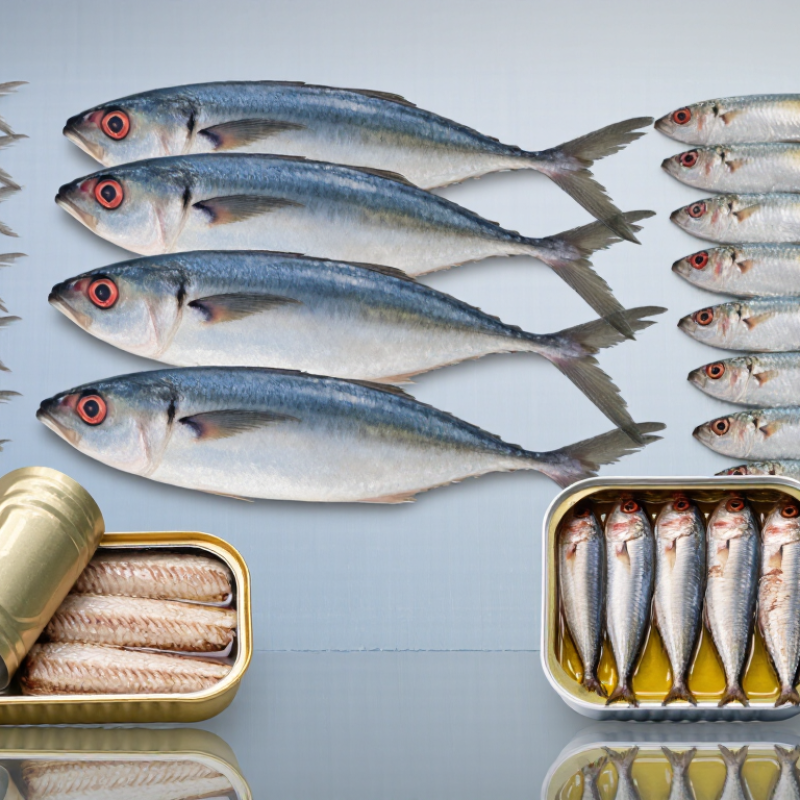
Sardines reach buyers as chilled whole fish, frozen whole fish, headed-and-gutted fish, fillets, or canned products. Each form suits a different route to market. Chilled fish needs rapid icing and short transit; frozen blocks or individually frozen fish offer more storage flexibility. Buyers should check glazing, size grades, and whether the declared weight includes protective ice. Small details matter.

Processing typically begins with sorting, washing, and chilling. Fish may then be gutted, filleted, or packed whole. Canning adds further steps: sardines are often brined, packed with oil, water, or tomato sauce, and heat-processed in sealed cans. This creates a shelf-stable product, but texture can vary with fish size and cooking conditions.

The trade-off is easy to miss. FAO’s 2024 State of World Fisheries and Aquaculture report estimates global aquatic animal production at 185.4 million tonnes in 2022, including 91.0 million tonnes from capture fisheries. These figures describe the wider supply base, not sardines alone.

For a purchase specification, ask for the product form, processing method, net drained weight, and storage temperature. Labels do not always tell the full handling story.

How Global Buyers Choose Sardines for Different Markets

Global buyers should select sardines by species, size, fat content, and end use—not by the common name alone. European buyers often seek European pilchard (Sardina pilchardus) for canned products, while Pacific and Japanese sardines suit markets familiar with regional species and flavor profiles. Names can overlap. State the scientific name on specifications to reduce sourcing confusion.

The market context matters. FAO’s The State of World Fisheries and Aquaculture 2024 reports global aquatic animal production of 185.4 million tonnes in 2022, with apparent consumption reaching 20.7 kilograms per person. These figures point to broad seafood demand, but they do not predict demand for a specific sardine species. Buyers should check local preferences directly: some customers want firm, small fish packed in oil; others prefer larger fish for grilling or chilled counters. Very practical.

For canned products, compare drained weight, skin condition, breakage, and packing medium across sample lots. For fresh or frozen supply, inspect glazing, temperature records, and thawed texture; a bright surface alone proves little. FAO’s Fishery and Aquaculture Statistics Yearbook provides species-level production data that buyers can use to check origin and supply patterns. Still, catch data are not a quality guarantee. A sample may look excellent, then cook softer than expected. Test the intended preparation before confirming volume.

Top Types of Sardine Fish for Global Buyers - How Global Buyers Choose Sardines for Different Markets

Common names for sardines vary between countries and trade channels. Buyers can use the scientific name, origin, size grade, product form, and applicable food-safety requirements to clarify specifications.

Common trade name Scientific name Typical sourcing regions Typical characteristics Common product forms Buyer considerations by market
European sardine Sardina pilchardus Northeast Atlantic and Mediterranean Sea A familiar sardine species in European seafood markets; sold in a range of sizes and preparations. Fresh, chilled, frozen, and canned; canned in oil, sauces, or brine. A common choice for European retail and food service. Check catch area, size grade, pack style, and the destination market’s labeling rules.
Pacific sardine Sardinops sagax Eastern Pacific and parts of the southern Pacific, including waters off the Americas A schooling pelagic fish whose availability and size can vary by season and fishing area. Frozen whole fish, prepared fish, and canned products, depending on the fishery and processor. Useful for buyers seeking Pacific-origin supply. Confirm current availability, harvest area, and whether the requested presentation is whole, cleaned, or canned.
Japanese sardine Sardinops melanostictus Northwest Pacific, including waters around Japan A regional sardine species used in both fresh and processed seafood supply chains. Fresh, frozen, dried, and processed products; availability varies by season and supplier. For East Asian channels, match the product form and size to local cooking or processing needs; verify origin and product specifications.
Indian oil sardine Sardinella longiceps Northern Indian Ocean, including waters along India’s coast An important regional food fish; size and fat content can vary with season and fishing area. Fresh, frozen, and processed products, depending on local supply and market demand. Often considered for South Asian supply needs. Buyers should specify size range, whole or dressed form, and cold-chain requirements.
Round sardinella Sardinella aurita Tropical and subtropical Atlantic; also found in the Mediterranean A small pelagic species marketed under regional names, which can differ from “sardine.” Fresh, frozen, dried, or processed, depending on the local fishery and market. Check the scientific name carefully when substituting for another sardine species, and confirm the destination country’s accepted commercial name.
Australian pilchard Sardinops neopilchardus Southern Australian and New Zealand waters A regional small pelagic fish commonly known as pilchard in its home markets. Fresh, frozen, and processed products, subject to local supply and handling. Suitable to consider for Australia–New Zealand regional sourcing. Confirm species identity, catch origin, intended use, and export eligibility.

Procurement note: Species availability, size, seasonality, product form, and permitted market names can vary by fishery and destination. Confirm these details with the supplier and the relevant import regulations before ordering.