
How to Find Sardines for Sale in Bulk?

Buying sardines in bulk can lower unit costs, but only when quality, pack size, and delivery conditions fit your needs. The phrase sardines for sale covers very different products: fresh fish, frozen stock, and shelf-stable tins. A low price per case may hide small fish, excess salt, or packaging that will not suit your customers.

For this guide, no verifiable interview or quotation from a named sardine-market expert was provided. Rather than invent one, we’ll use a practical sourcing principle: “Compare the fish, the pack, and the delivered cost—not price alone.” Treat it as guidance, not a quotation from a real expert. Ask suppliers for a current specification sheet, case weight, catch or production details, and storage requirements. If possible, inspect a sample. Look closely at tin seams, labels, and the condition of chilled packaging. Small details matter.

Be cautious with vague listings. “Premium” is not a measurable grade, and photographs can conceal differences in size or presentation. Confirm minimum order quantities, lead times, and how damaged goods are handled before committing. Keep written records of quotes and product specifications. Even then, a first shipment may reveal gaps in your checklist. That is useful feedback. A careful comparison gives buyers a steadier way to find bulk sardines that meet their quality, budget, and handling needs.
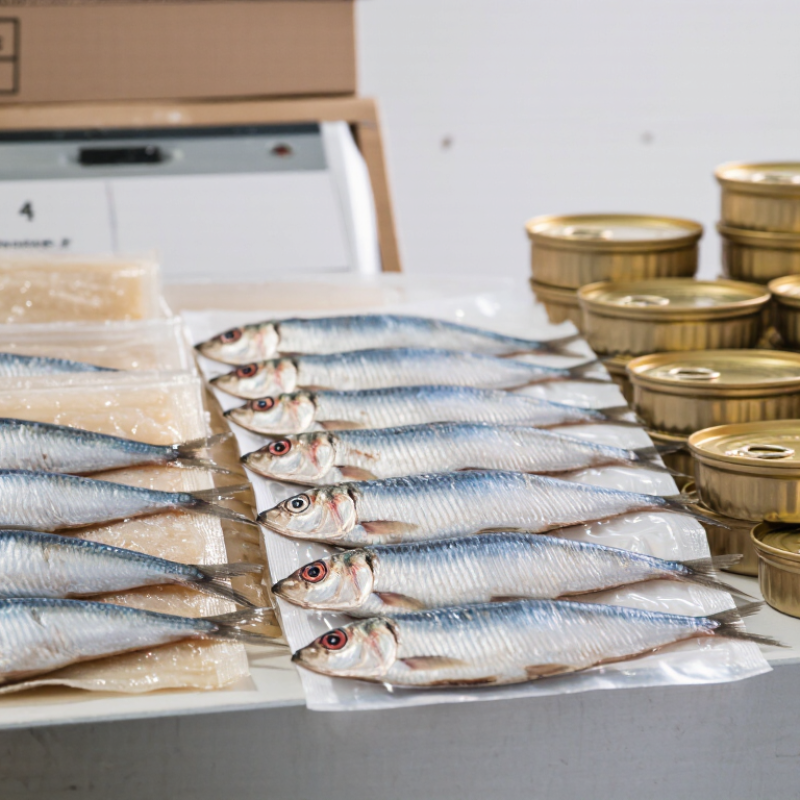
How to Find Sardines for Sale in Bulk?

Understanding the Bulk Sardine Market

Bulk sardines are not one uniform commodity. Buyers encounter fresh, frozen, and canned formats, each with different species, landing seasons, and size grades. These differences affect yield, handling, and price comparisons. A quote per tonne can mislead when it compares whole fish with cleaned or packed product. Check the species name, origin, production method, size range, frozen-product glaze, and canned-product drained weight. Small details matter.

Market scale needs context. The Food and Agriculture Organization’s The State of World Fisheries and Aquaculture 2024 reports 185.4 million tonnes of aquatic-animal production in 2022, including 92.3 million tonnes from capture fisheries. Those figures describe the wider sector, not sardines alone. Treating them as sardine supply would be a mistake. Sardine availability is more local and seasonal, shaped by fishing conditions, processing capacity, and demand from food and fishmeal markets.

Before placing a bulk order, compare specifications and delivery terms alongside price. Ask for lot-level traceability documents and temperature records, then confirm how rejected or damaged goods are handled. A pallet of frozen fish should arrive hard-frozen, with packaging intact and labels matching the agreed species and origin. One weak point in many comparisons is focusing on the headline price while overlooking usable yield. I would check that twice.

How to Find Sardines for Sale in Bulk? — Understanding the Bulk Sardine Market

Compare order sizes by product weight to estimate how many 100 g portions each bulk order represents.

These are planning examples, not market averages or supplier minimums. Portion equivalents are calculated from product weight at 100 g per portion; for canned sardines, check whether the quoted weight is net or drained weight. Before ordering, confirm the product form, pack size, cold-chain requirements, origin, certifications, delivery terms, and total landed cost with the supplier.

Identifying Reliable Wholesale Sardine Suppliers

When evaluating wholesale sardine suppliers, ask for the exact species, harvest area, catch date, and product form. “Sardines” can refer to different small pelagic species, so request the scientific name on the specification sheet. Compare that information with FAO FishStat data, which records capture production by species and country. FAO’s The State of World Fisheries and Aquaculture 2024 reports 185.4 million tonnes of aquatic animal production in 2022. That figure is not sardine-specific, but it shows why species-level checks matter in a large, varied seafood market.

Request recent lot records, temperature logs, and independent test results before agreeing to volume or price. For frozen fish, check glaze percentage, storage temperature, carton weight, and thawed sample quality; for canned sardines, confirm drained weight, packing medium, and date coding. Details matter. Ask how shortages, damaged cartons, or quality disputes are handled, and get the terms in writing. A small trial order can reveal more than a polished sales sheet. Compare the sample with the delivered lot, including smell, firmness, and size consistency. No checklist catches every problem; paperwork can still be messy. But unclear traceability or missing cold-chain records is a sound reason to pause and ask more questions.

How to Find Sardines for Sale in Bulk? - Identifying Reliable Wholesale Sardine Suppliers

Evaluation Dimension What to Confirm Practical Bulk-Buying Benchmark Documents or Evidence to Request Reliability Signal
Product Identity Scientific species, fishing area, catch method, and whether the sardines are wild-caught or farmed. The product description should identify the species and origin consistently across the quotation, label, and shipping documents. Product specification sheet, catch-area statement, traceability information, and sample label. The supplier provides precise product details instead of using only general terms such as “premium fish.”
Processing Form Whether the sardines are fresh, frozen, canned, filleted, headed and gutted, or packed whole. Frozen products commonly require continuous cold-chain handling; canned products should specify can size, pack style, liquid medium, and net weight. Processing specification, product photographs, packaging details, and storage instructions. Specifications are detailed enough for comparison between suppliers and for customs or food-service use.
Quality Grade and Size Fish count per kilogram, piece size, trimming standard, glazing percentage for frozen goods, and acceptable defects. Use a defined size range and defect tolerance; do not compare quotations unless the grade and net product weight are equivalent. Grade standard, sizing chart, inspection report, and approved sample. The quoted price is linked to measurable quality specifications.
Food-Safety Controls Hazard-control procedures, sanitation, allergen management, foreign-material prevention, and recall procedures. A supplier should operate a documented food-safety system appropriate to the product and destination market. Valid food-safety certificate, audit summary, sanitation procedures, and recent test reports. Certificates are current, issued to the actual processing facility, and can be independently verified.
Microbiological and Chemical Testing Testing for relevant pathogens, histamine, heavy metals, residues, and other hazards required by the destination market. Testing frequency should reflect the product risk, local regulations, and the supplier’s hazard-analysis program. Certificate of analysis, laboratory name, test methods, sample date, lot number, and applicable limits. Reports are lot-specific and issued by a qualified or accredited laboratory.
Traceability Ability to trace the product from fishing or receiving through processing, packing, storage, and shipment. Each lot should have a unique code connected to production records and shipping documents. Lot-code explanation, catch or receiving records, packing list, and traceability exercise results. The supplier can identify the source and destination of a lot quickly and consistently.
Minimum Order Quantity Minimum order by product, size, packaging format, and shipping method. Wholesale orders are often quoted by carton, pallet, or container; the exact minimum varies by product and destination. Written quotation showing minimum order, carton count, pallet configuration, and price basis. The supplier clearly separates minimum order requirements from recommended order volumes.
Packaging and Net Weight Primary packaging, master cartons, net weight, drained weight for canned goods, case dimensions, and pallet loading. Compare prices using net or drained weight rather than gross carton weight alone. Packaging specification, carton marking, pallet diagram, and sample carton label. Weights, dimensions, and labeling information match the commercial invoice and packing list.
Cold-Chain Management Required storage temperature, loading controls, transport conditions, and temperature monitoring. Frozen sardines should remain frozen throughout storage and transport; the exact temperature requirement must follow the product specification and applicable law. Temperature records, storage photos, loading procedure, and reefer or container requirements. The supplier explains how temperature deviations are detected, recorded, and handled.
Sample Approval Taste, odor, texture, appearance, can integrity or frozen condition, and conformity with the written specification. Approve a representative production sample before placing a large order, especially when purchasing a new product or grade. Signed sample approval record, evaluation checklist, and retained reference sample where practical. The supplier agrees that future shipments will match the approved specification.
Shipping and Trade Terms Price basis, port of loading, delivery point, lead time, payment terms, and responsibility for freight, insurance, and customs. Compare quotations on the same Incoterms® rule, currency, quantity basis, and delivery destination. Pro forma invoice, shipping schedule, Incoterms® reference, and required export documents. All costs and responsibilities are written clearly before payment or production begins.
Regulatory Compliance Import eligibility, labeling rules, permitted additives, language requirements, and health or veterinary documentation. Requirements vary by destination; confirm them with the importing authority or a qualified customs and food-compliance professional. Health certificate, export documentation, label artwork, ingredient declaration, and import permit information where applicable. The supplier has experience preparing documents for the specific destination market.
Supplier Communication Responsiveness, technical knowledge, order updates, complaint handling, and willingness to provide verifiable records. A reliable supplier answers specification questions directly and confirms changes in writing. Quotation history, corrective-action procedure, customer-service contact, and written order confirmation. Communication remains consistent from sample stage through shipment and after-sales support.

Comparing Sardine Types, Packaging, and Quality

How to Find Sardines for Sale in Bulk?

Comparing Sardine Types, Packaging, and Quality

Bulk sardines come in several practical forms. Oil-packed fish usually taste richer and feel softer. Water-packed sardines offer a cleaner flavor and lower added fat. Tomato or chili sauces create stronger menu options, but they require careful recipe matching. Small sprat-style sardines have delicate bones and a compact appearance. Larger sardines provide firmer flakes and more visible portions.

Packaging affects storage, transport, and customer perception. Tin cans protect fish from light and oxygen when sealed correctly. Pouches weigh less, but their seals need close inspection. Ask suppliers about case counts, drained weight, packing dates, and pallet conditions.

A dented can is not automatically unsafe, yet deep seams or swelling deserve rejection. Case labels should show lot numbers and traceability details.

Quality Checks

Quality checks should include smell, texture, color, and liquid clarity. The fish should smell fresh after opening, not sharply sour or metallic. Flesh should remain intact instead of turning mushy. Review temperature records and available laboratory documents, especially for histamine control.

I also compare samples from different lots before placing a large order. A low price can hide excess liquid or inconsistent sizing.

I still find this part imperfect. Supplier claims need independent checks, not polite assumptions. Always calculate usable fish, not only the invoice weight.

Evaluating Pricing, Minimum Orders, and Shipping

Buying sardines in bulk looks simple until the quote arrives. Wholesale prices often depend on species, pack size, oil or water, and processing grade. Request a written quote showing the price per case, can, or kilogram. Then compare like with like. One supplier may quote landed cost, while another excludes freight, insurance, or port fees. Ask whether the price is fixed for the shipment or subject to market changes. Small differences multiply across a pallet.

Minimum order quantities can range from a few cases to a full truckload. Do not accept a low unit price without checking the required volume. A large order may tie up cash, warehouse space, and staff time. Measure realistic monthly demand, shelf-life needs, and storage capacity before committing. Ask about mixed cartons, trial orders, and remaining shelf life at dispatch. These details can matter more than a discount. Be careful here.

Shipping should be evaluated by route, weight, delivery terms, and handling requirements. Request estimated transit times and the documents supplied with each shipment. Temperature-controlled transport may suit some products, while canned sardines usually require dry, clean storage. Confirm carton dimensions, pallet count, unloading arrangements, and responsibility for damage. A common mistake is focusing on price while overlooking a missed delivery window. That can erase the savings. Leave room for inspection delays and unexpected charges.

Placing and Verifying a Bulk Sardine Order

When searching for sardines for sale in bulk, begin with a supplier that provides clear product details. Ask for the species, average fish size, net weight, packing format, and storage condition. Frozen and canned products require different handling plans. Request recent photos of cartons, labels, and pallet markings. Small details often reveal weak inventory control.

Place the order in writing. Include the exact quantity, delivery window, packaging requirements, and agreed price. Confirm whether the quote includes transport, inspection, and temperature-controlled delivery. Before payment, request a commercial invoice, product specification sheet, lot information, and available traceability records. A reliable supplier should answer directly, not avoid basic questions. Keep every revision in one email thread.

Verify the shipment before accepting it. Check carton counts, net weight, seals, labels, and visible damage. For frozen sardines, review temperature records and look for thawing, heavy ice buildup, or leaking boxes. For canned sardines, inspect dents, rust, swollen cans, and unclear dates. A sample inspection is worth the extra time. Do not rely only on attractive photos. I once considered a low quote too quickly, and the packing details were incomplete. That was a warning I nearly missed. Build a small allowance for shortages or rejected cartons. It may seem cautious, but bulk orders magnify small mistakes.