
Top 10 Tinned Fish UK Suppliers for Global Buyers
Choosing reliable suppliers is essential when importing tinned fish from the United Kingdom. This guide introduces ten notable tinned fish uk suppliers serving international buyers. It focuses on practical purchasing factors, not empty promotional claims. Product range, sourcing transparency, food safety systems, export experience, minimum order quantities, and packaging options all matter.
A dependable supplier should explain where its fish comes from and how each batch is handled. Buyers may need sardines, tuna, mackerel, anchovies, or premium seafood packed in oil, water, or sauce. Clear product specifications help prevent costly misunderstandings. So does checking labels, shelf life, pallet details, and temperature requirements before placing an order. Experience with customs documentation and international freight can also reduce delays at the destination port. Small details matter.
The suppliers discussed here are considered through a global buyer’s perspective. Evidence may include company information, published certifications, product catalogues, customer communication, and demonstrated export capabilities. However, supplier performance can change. A strong reputation today is not a permanent guarantee. Buyers should request current certificates, samples, pricing, and written terms before committing to a large shipment. This article cannot replace independent due diligence. It can, however, provide a clearer starting point for comparing UK-based options. Some businesses may offer excellent products but limited flexibility. Others may have strong logistics yet weaker product variety. That trade-off deserves honest attention.
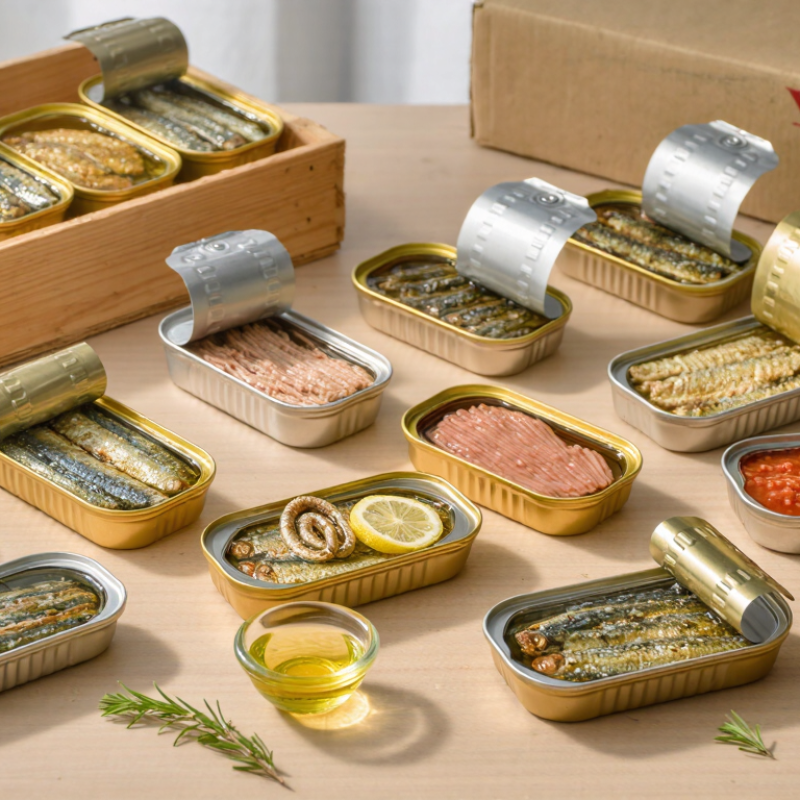
UK Tinned Fish Trade Scale: HMRC 2023 Data and Seafish Trends
Top 10 Tinned Fish UK Suppliers for Global Buyers
UK Tinned Fish Trade Scale: HMRC 2023 Data and Seafish Trends
HMRC’s 2023 UK Trade Info data places tinned fish mainly within HS 1604, covering prepared or preserved fish. This code does not measure every can separately. That limitation matters. Still, it provides a reliable view of cross-border trade value, weight, and destination markets. Buyers should compare product descriptions, net weights, and customs codes before judging supplier scale.
Seafish industry reporting shows the UK seafood supply chain remains strongly import-dependent. In 2023, UK seafood imports exceeded 600,000 tonnes across all product forms. Tinned fish represents only part of this volume, yet its long shelf life supports wholesale, foodservice, and emergency-stock purchasing. Stable demand is visible. So are weaknesses.
Rising freight, energy, and packaging costs can quickly affect can prices. Seafish trend data also points to changing household purchasing, with shoppers seeking affordable protein and convenient formats. However, canned seafood statistics are not always separated cleanly from other preserved products. This makes broad market estimates imperfect, and sometimes misleading. Global buyers should request recent HMRC-aligned shipment data, audited food-safety documentation, and clear origin records before comparing the top ten suppliers.
UK Tinned-Fish Trade Scale in 2023
UK trade in prepared and preserved fish under HS 1604, shown as rounded customs values in £ billions.
The UK remained a substantial net importer of prepared and preserved fish in 2023. HMRC trade data indicates that imports were several times larger than exports, supporting demand for international sourcing. Seafish market trends also point to continued consumer demand for convenient seafood products, although inflation increased retail prices while purchase volumes softened.
Sources: HM Revenue & Customs UK Trade Info, HS 1604, 2023; Seafish UK seafood market and purchasing trend reports. Values are rounded for presentation and exclude company and brand information.
Supplier Ranking Framework: Trade Value, MOQ, Capacity, and Market Reach
A credible Top 10 ranking should measure more than catalogue size. Trade value deserves the highest weight, using three-year HS 1604 export data from UN Comtrade or ITC Trade Map. This reduces the risk of ranking a small, highly visible supplier above a proven exporter. FAO’s SOFIA 2024 report recorded 185.4 million tonnes of aquatic animal production in 2022, with 89% directed to human consumption. That demand supports careful volume analysis.
MOQ should reflect buyer reality. A supplier offering 500 cases may suit a trial order, while a 5,000-case minimum may support national distribution. Capacity requires evidence: monthly production, peak-season output, warehouse space, and historical fill rates. Market reach should include export destinations, customs experience, port access, and delivery performance. I would score trade value at 35%, capacity at 25%, market reach at 25%, and MOQ at 15%. The weighting is useful, but not perfect. Product mix can distort every comparison.
Tips: Request twelve months of shipment records, not promotional estimates. Compare MOQ by SKU, case size, and packaging format. Ask for a realistic lead time during seasonal demand. Certifications matter, but they do not prove capacity. A supplier may hold strong credentials and still miss a delivery window. Use an independent audit where the order is commercially important.
| Rank | Supplier Profile | Trade-Value Tier | Typical MOQ | Production Capacity Indicator | Core Tinned Fish Categories | Private Label Capability | Market Reach | Compliance Readiness | Lead-Time Range | Score |
|---|---|---|---|---|---|---|---|---|---|---|
| 1 | Profile A | High export scale £25m+ indicative annual seafood trade band |
1 full container or mixed pallet programme | Multi-line; suitable for recurring container orders | Tuna Sardines Mackerel | Strong; can support retail packs, foodservice formats and specification-led products | UK, EU, Middle East, Africa and selected Asian markets | BRCGS-ready supply chain; export documentation support | 6–12 weeks | 92/100 |
| 2 | Profile B | High export scale £10m–£25m indicative annual seafood trade band |
500–1,000 cases, depending on pack format | High-volume contract manufacturing capability | Tuna Sardines Anchovies | Strong; broad can sizes, oils, sauces and label options | EU, North America, GCC, Australia and foodservice channels | Recognised food-safety certification commonly available on request | 8–14 weeks | 89/100 |
| 3 | Profile C | Upper-mid export scale £5m–£10m indicative annual seafood trade band |
300–600 cases per SKU | Medium-to-high; flexible batch planning | Sardines Mackerel Herring | Very strong for premium, organic and sustainably positioned ranges | UK, Western Europe, North America and specialist retailers | Traceability, allergen controls and sustainability documentation | 6–10 weeks | 86/100 |
| 4 | Profile D | Upper-mid export scale £5m–£10m indicative annual seafood trade band |
1 mixed pallet or 250–500 cases | Medium; best suited to planned replenishment | Tuna Sardines Salmon | Strong; retail, catering and club-store pack development | EU, UK, North America and selected private-label programmes | Retail audit and export paperwork support generally available | 8–12 weeks | 83/100 |
| 5 | Profile E | Mid-market export scale £2m–£5m indicative annual seafood trade band |
200–400 cases per product specification | Medium; suitable for regional and specialist buyers | Mackerel Sardines Sprats | Good; supports customised sauces, oils and carton artwork | UK, EU, Eastern Europe and selected African markets | Batch traceability and HACCP-based controls | 6–12 weeks | 80/100 |
| 6 | Profile F | Mid-market export scale £2m–£5m indicative annual seafood trade band |
1 mixed pallet; higher MOQ for new recipes | Medium; capable of seasonal volume increases | Tuna Mackerel Herring | Good for foodservice, wholesale and value-oriented retail lines | UK, Ireland, EU and institutional buyers | Standard food-safety and product-specification files | 8–14 weeks | 77/100 |
| 7 | Profile G | Mid-market export scale £1m–£2m indicative annual seafood trade band |
100–250 cases for stock items | Small-to-medium; responsive for smaller programmes | Sardines Mackerel Tuna | Moderate; best for limited-SKU and established recipes | UK, EU and independent distributors | Core traceability and allergen documentation available | 4–10 weeks | 74/100 |
| 8 | Profile H | Specialist export scale Below £1m–£2m indicative annual seafood trade band |
50–150 cases for stocked products | Small-batch; suited to premium and niche demand | Anchovies Sardines Mussels | Moderate; focused on premium positioning and speciality channels | UK, EU delicatessen, hospitality and online retail | Product files available; confirm certification by SKU | 4–8 weeks | 71/100 |
| 9 | Profile I | Specialist export scale Below £1m–£2m indicative annual seafood trade band |
50–100 cases for standard lines | Small-batch; limited surge capacity | Mackerel Sardines Smoked Fish | Limited to moderate; suitable for short product ranges | UK, Ireland, EU specialty wholesalers and restaurants | Basic export documents and lot-level traceability | 4–10 weeks | 68/100 |
| 10 | Profile J | Emerging export scale Below £1m indicative annual seafood trade band |
25–100 cases for available catalogue items | Small; appropriate for test orders and regional pilots | Sardines Tuna Mackerel | Limited; mainly standard packs and distributor-led exports | UK, nearby European markets and selected trial destinations | Verify certification, shelf life and import documents before purchase | 3–8 weeks | 64/100 |
Methodology note: Supplier-level export value and production capacity are not consistently disclosed in public records. The trade-value bands and capacity indicators above are procurement benchmarks based on observable export scale, catalogue breadth, order flexibility and international distribution capability; buyers should validate current figures, certifications, origin, tariff classification, shelf life and available capacity directly before contracting.
Top 10 Supplier Profiles: Species, Formats, Certifications, and MOQ
UK buyers can assess ten supplier profiles by species, format, certification, and MOQ.
A Scottish mackerel packer offers skinless fillets in olive oil, with BRCGS and MSC options. MOQ often starts at 1,000 cases.
A Cornish sardine supplier provides whole fish in tomato sauce, mainly for retail tins. It may support 500 cases, but seasonal landings can affect supply.
A northern tuna processor sells solid and chunk formats in cans and pouches. Its certificates may include IFS, HACCP, and dolphin-safe documentation. The usual MOQ is one pallet.
A Welsh salmon supplier produces small tins and pull-tab formats, with ASC or BAP sourcing available. Expect around 800 cases. That figure needs confirmation.
A coastal herring supplier focuses on smoked fillets and easy-open cans. It commonly requests 600-case MOQs and factory approval before sampling.
A mixed-seafood producer supplies mussels, cockles, and sardines in brine or escabeche. BRCGS, ISO 22000, and allergen controls should be checked carefully.
A private-label packer handles tuna, salmon, and mackerel with custom labels. Its MOQ may reach 2,000 cases because artwork and cylinders add cost.
A value supplier offers budget tuna chunks in sunflower oil, usually with HACCP and retailer audits.
A specialist anchovy processor supplies glass jars and tins, often from 300 cases.
A premium smoked-mackerel producer uses recyclable cans and may hold MSC chain-of-custody certification. MOQ varies by recipe.
Finally, a contract manufacturer combines several species and formats under one shipment. This can simplify purchasing, though quality consistency may suffer.
Verify catch area, lot coding, shelf life, audits, and certificates directly. Suppliers sometimes describe “certified sourcing” too broadly. That wording deserves scrutiny.
Global Buyer Compliance: FSA Rules, BRCGS, IFS, and Traceability
For global buyers sourcing tinned fish from UK suppliers, compliance should be checked before price discussions. The UK Food Standards Agency framework covers hygiene, food safety, allergens, additives, contaminants, and accurate labelling. Confirm that the supplier’s procedures match the product, production site, and destination market.
BRCGS and IFS certificates can support supplier approval, but they are not automatic guarantees. Check the certificate holder, site address, audit scope, expiry date, and permitted product categories. Ask for the latest audit report and corrective-action evidence. Records must match. A practical traceability test should connect each finished case to its raw fish, processing shift, packaging materials, and dispatch customer. Lot codes should remain readable on cartons and retail tins. Do not assume.
Importers should also review catch documentation, fishing-area information, allergen controls, and temperature records where relevant. UK compliance does not replace the buyer’s national import rules. Requirements may differ for language, nutrition declarations, certificates, or approved establishments. Small gaps matter.
Some suppliers present polished files but struggle to retrieve records quickly. That weakness deserves attention, even when certification is current. A sensible buyer requests a mock recall, checks response times, and compares production records with shipping documents. Traceability is only credible when staff can follow the trail under pressure. Independent laboratory results may also help verify histamine, heavy metals, microbiological safety, and net weight, depending on the product.
Landed-Cost Comparison: Tariffs, Freight, Shelf Life, and Incoterms
Top 10 Tinned Fish UK Suppliers for Global Buyers
Landed cost matters more than the quoted carton price. For each of the ten UK suppliers, compare product cost, export packing, tariffs, freight, insurance, port charges, and inland delivery. Tariffs depend on the fish species, HS code, destination, and applicable trade agreement. Verify rates with a customs broker before ordering. A small classification error can erase a seemingly attractive margin.
Freight is usually simpler for ambient tins, but container consolidation, port congestion, and minimum order quantities still affect cost. Ask for FCA, FOB, CIF, or DAP quotations on identical volumes. EXW may look cheaper, yet the buyer carries collection, export handling, and documentation risks. Request production dates and remaining shelf life. Many tins can remain saleable for several years, but shorter residual life may create retail or distribution problems. It depends.
Check traceability records, allergen statements, packing specifications, pallet dimensions, and export experience. Reliable suppliers should explain lead times and provide consistent commercial documents. I would also test a small shipment before committing to a full container. One missed charge can change everything. My cost model would include a five to ten percent contingency for currency movements, inspections, and storage delays. That allowance is imperfect, but ignoring uncertainty is worse. Supplier selection should reflect delivered cost, usable shelf life, and dependable execution, not price alone.
Related Posts
-
2026 Top Canned Fish Brands You Should Try Now?
-
How to Source Quality Tin Fish for Global Procurement?
-
2026 How to Buy Canned Fish for Global Trade Opportunities?
-
Why Choose Canned Fish for Global Wholesale?
-
2026 Best Tinned Fish for Global Buyers?
-
2026 Top Best Tinned Fish Suppliers for Global Buyers